

Getting Started
Lapidary, the art of cutting and polishing stones, is both a precise technical process and a deeply creative craft. It transforms rough, unpolished material into finished gemstones that can be used in jewelry or collected for their beauty.
You do not need years of experience to begin. This guide walks you through everything you need to know, from essential tools and basic techniques to a simple overview of the cutting process.
Lapidary refers to the process of cutting, shaping, and polishing stones to transform them into finished gemstones. It involves a combination of techniques designed to enhance the natural appearance, color, and brilliance of a stone.
The practice dates back thousands of years, with early forms found in ancient civilizations such as Egypt and Mesopotamia. Faceting appeared in European jewelry around the 14th century, and cutters in places such as Bruges and Venice refined it over the following centuries, improving cutting precision and the way gemstones handle light.
Today, lapidary combines traditional craftsmanship with modern tools, making it more accessible while still requiring precision, patience, and attention to detail. The two main approaches are faceting, which creates flat surfaces that reflect light and maximize brilliance, and cabochon cutting, which produces smooth, rounded stones that highlight color and internal patterns.
Learning lapidary can be much more than a hobby. For some it becomes a true passion, for others a side project or even a source of income over time. Some commercially cut gemstones are cut to save weight rather than to maximize brilliance. With attention to detail and a solid understanding of the fundamentals, it is possible to produce results that stand out. Beyond the technical side, transforming a rough stone into a finished gem brings a real sense of accomplishment.
The central piece of equipment. It lets you control angles, position the stone accurately, and work with consistency. Stability and precision matter most here.
Often called the quill. It holds the stone and brings it into contact with the rotating lap, controlling both angle and depth during cutting. Read the handpiece guide.
The stone is mounted onto a dop using wax. The transfer system lets you work on different sides while maintaining alignment.
Essential for shaping and finishing the stone, using different grit levels from rough shaping to fine polishing.
Used in the final stage to enhance the surface and bring out the stone’s brilliance.
Beginners do not need the most advanced equipment to start. A simple, reliable setup is enough to learn the fundamentals and produce quality results.
Lapidary involves moving machinery, water, heat and sometimes a laser. A few habits keep it safe.
- Wear eye protection, and keep your hands, hair and clothing clear of moving laps.
- Keep power cords and switches away from the water pot and drip.
- Work with good ventilation when you heat wax or use a torch, and keep anything flammable away from any flame.
- If you use a laser to check alignment, choose a low-power Class 2 laser, never look into the beam and never point it at anyone.
- Read the safety instructions from the maker of every tool you use. Our Terms of Use include a full safety notice.
One of the most precise methods. It involves cutting flat surfaces in a symmetrical pattern to maximize how light reflects within the stone. Commonly used for transparent gemstones.
Focuses on creating smooth, rounded stones without facets. Often used for opaque or translucent materials, where color and internal patterns matter more than brilliance.
Choose a suitable rough stone and check for inclusions or imperfections that could affect the final result.
Beginners usually start with existing models, while more advanced cutters may create their own.
The stone is mounted using wax, allowing precise handling during cutting.
Different laps gradually shape the stone according to the chosen design.
Once one side is complete, the stone is transferred while maintaining proper alignment.
The final stages enhance clarity and brilliance. With practice, the whole process becomes more intuitive.
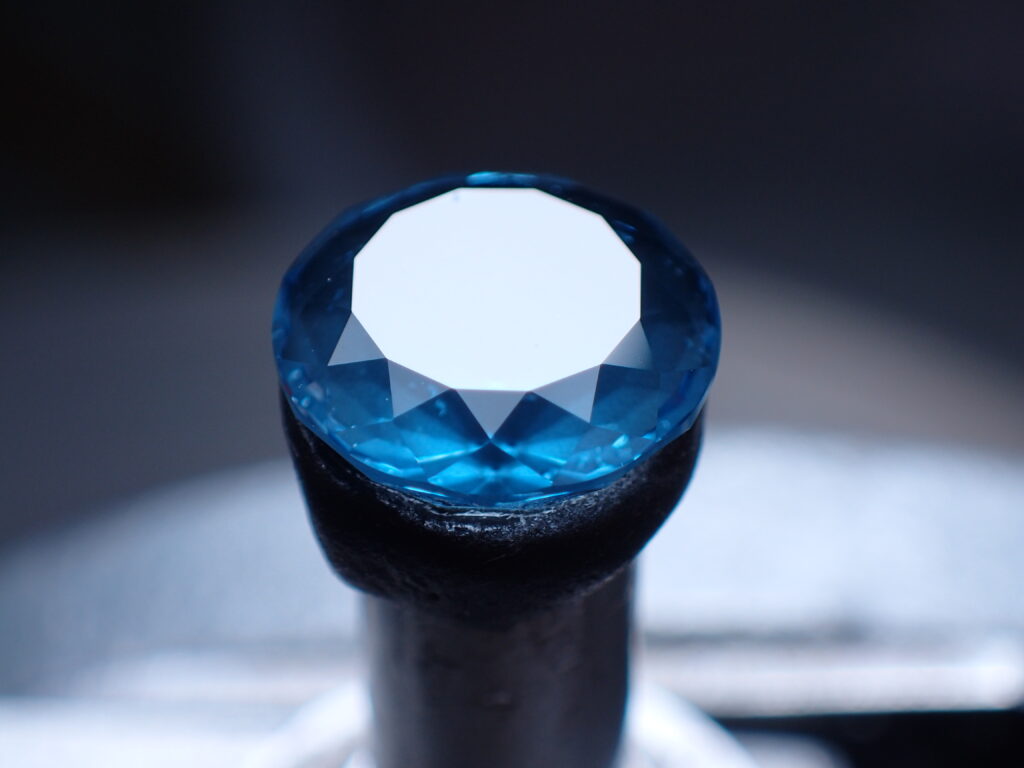
Precision is essential, even small errors in angle or positioning affect the final symmetry.
First stones often take a long time or fall short of expectations. That is a normal part of learning.
The transfer step is critical. Poor alignment affects the balance of the final gemstone.
Simple designs let beginners focus on mastering the fundamentals before moving to advanced work.
Ready for your first project?
Evaluate your equipment options, follow a complete guide, and stay consistent. Progress in lapidary comes from repetition and attention to detail.
Start the Round Cut Guide →